Program(s) Available: B.A.S., B.S.
Are you passionate about health and wellness and want to help people live healthier, longer lives? If so, a bachelor's degree in public health is for you. At Northwest Missouri State University, you’ll benefit from classroom learning combined with practical experiences that prepare you to prevent disease, promote healthy lifestyles and improve the wellbeing of communities. Our bachelor of science in public health program develops your skills in research, data analysis, communication, leadership and advocacy to create endless possibilities for your future career. Whether you want to work in hospitals, public health departments, nonprofits, government agencies or other organizations, at Northwest, you can customize your degree to your goals. You can also continue on to pursue graduate programs, such as a master of public health (MPH).
If you’re enrolling in college for the first time, choose this option. You'll build the knowledge and practical skills to address challenges like chronic disease, health disparities, environmental health, emergency preparedness and access to care through prevention, education, research and policy. Our interdisciplinary program combines public health fundamentals with opportunities to specialize based on your interests and career goals.
The B.S. in public health requires 120 credit hours, including courses in:
In these courses, you’ll learn how to:
You'll also complete a capstone internship, applying what you've learned in a professional public health setting while building your résumé, professional network and real-world experience before graduation.
If you have already completed a technical associate of applied science (A.A.S.), associate of science (A.S.), or certificate from a regionally accredited community college, the B.A.S. in public health provides a streamlined path for you to earn your bachelor’s degree. This flexible option maximizes transfer of your vocational and technical courses while building the advanced skills necessary for public health practice.
This degree path offers:
Looking for flexible public health degrees that offer the same quality as on-campus programs? Explore Northwest’s online bachelor’s in public health program. Designed for busy students, our program allows you to balance work, family or other commitments while still providing the same comprehensive coursework and practical learning experiences as Northwest’s on-campus major.
At Northwest, your education extends beyond textbooks and lectures. You'll work with local organizations in Missouri, apply what you learn to real public health issues and gain experience that prepares you for your future career. You'll also develop leadership skills and build a professional network that spans multiple sectors. With a major in public health from Northwest, you'll graduate ready to make an immediate impact or continue your studies – whichever path is best for you.
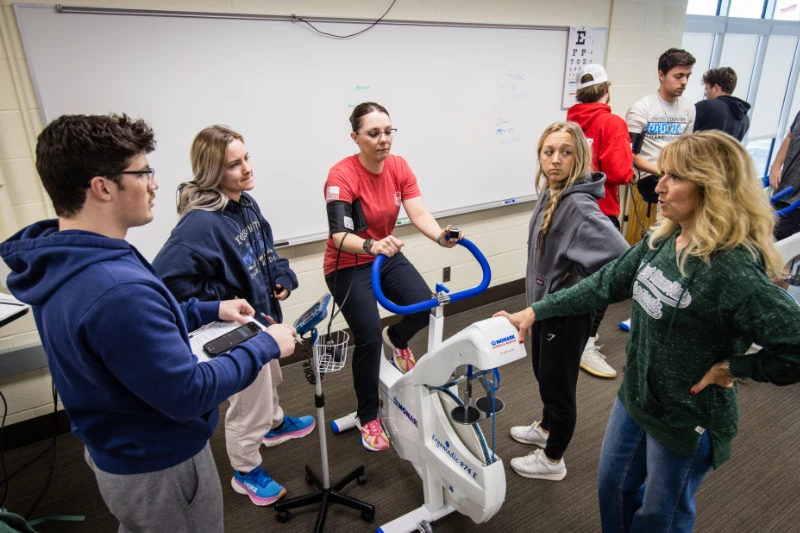
Public health is about understanding the many factors that influence health (including, but not limited to, medicine). At Northwest Missouri State University, you'll explore topics like health-care access, communication, environmental science, policy and social issues to better understand why health challenges happen and how to solve them. By learning from multiple perspectives, you'll be better prepared to develop practical, evidence-based solutions that improve lives.

From designing health promotion programs for organizations in Northwest Missouri to conducting community health assessments, you'll apply classroom concepts to real situations. You’ll also complete a capstone internship with health agencies, health-care systems, nonprofit organizations or government departments, giving you practical skills and professional connections that employers value. These experiences help you build your résumé, expand your professional network and graduate with experience employers are looking for.
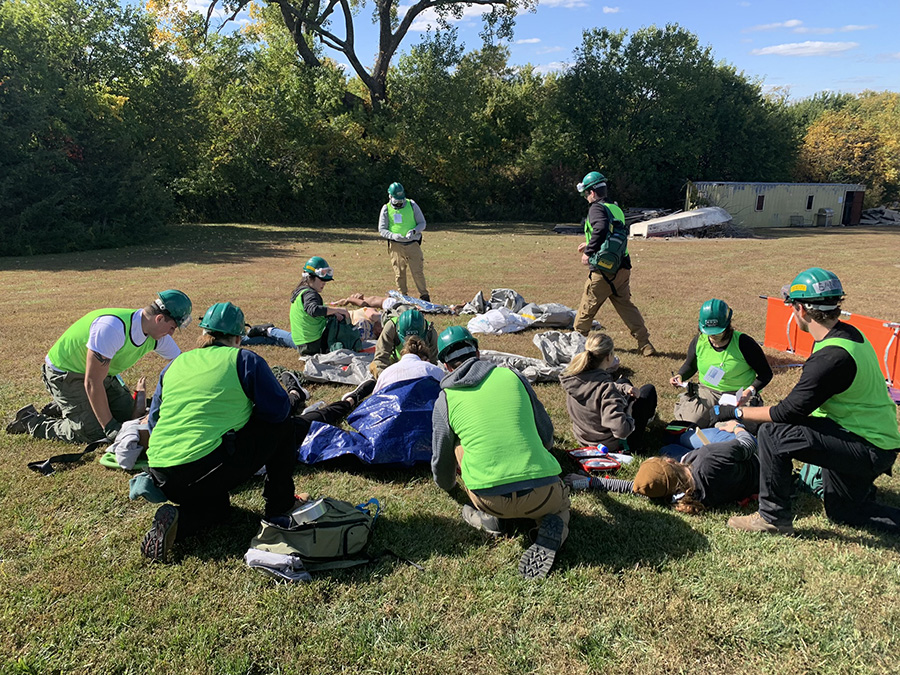
Public health offers remarkable career flexibility, and our program boosts your options. At Northwest, you’ll develop knowledge and skills for roles across health care, government, research and nonprofit, including health promotion, emergency preparedness, policy and more. Whether you plan to enter the workforce immediately or pursue graduate education, your degree in public health provides a solid foundation for numerous career paths. It’s a future-proof investment in your professional development.

Wed, Oct. 7, 2026
(applied health science)
Wed, Oct. 7, 2026
(recreation, parks, sport & tourism)
Wed, Oct. 7, 2026
(health/PE & foods/nutrition)
School of Health Science & Wellness
660.562.1297
cgast@nwmissouri.edu
With a B.S. in public health, you’ll be prepared for careers in one of today's fastest-growing fields. According to the U.S. Bureau of Labor Statistics, jobs for community health workers are projected to grow 11% over the next decade, a rate much faster than average.
Specific public health degree jobs include:
The public health degree program also provides a strong foundation for graduate programs such as a master of public health (MPH), master of health administration (MHA), medical school and other health professions.

We make your bachelor’s degree in public health affordable through various financial support options, including university-wide scholarships and program-specific funding opportunities. While developing the skills for a high-demand career, you'll benefit from Northwest's commitment to keeping your education accessible and your prospects open. Search health-related scholarships or browse all aid below.

Northwest's public health major is one of over 200 programs that exemplifies our university-wide commitment to your success. Our faculty bring real-world public health experience into the classroom while maintaining an open-door policy for mentoring. We continuously adapt our curriculum to address emerging health challenges, ensuring you graduate with relevant knowledge and skills that employers seek.
Connect with peers who share your passion for health and wellness through organizations like the Applied Health Science Club or Kappa Omicron Nu (KoNU). These groups provide opportunities for networking, community service and professional development that complement your classroom learning and enhance your résumé.
With the most national titles in DII football history, 12 different sports teams and a community that cheers them on, you’ll feel Bearcat pride wherever you go – and experience a campus that truly feels like home.
“I chose Northwest for its welcoming environment, low student-to-professor ratio, and one-on-one, hands-on learning opportunities. I owe my success to the faculty who taught me to get out of my comfort zone.”
Grace Carter | Student Teacher, Park Hill School District | Health Education (2025)
A public health major is an interdisciplinary program that prepares you to protect and improve population health through prevention, education and policy development. At Northwest, our major combines coursework in epidemiology, health policy, environmental health, social determinants of health and research methods with profession-based community experiences.
Unlike clinical health-care programs that focus on treating individual patients, public health examines the broader factors that influence health outcomes across entire communities.
Learn more about what a public health major is and whether it’s for you.
A public health major gives you skills to work in a variety of roles, including:
Public health is an excellent major if you’re interested in science and making a difference in health-related fields. A public health bachelor’s degree is particularly well-suited for those who enjoy analyzing complex problems and working with people. The major also offers exceptional career flexibility – your skills will be valuable in health-care, government, nonprofit, research and corporate settings.
Yes. Northwest's bachelor of science in public health includes many STEM-focused subjects, including biology, epidemiology, environmental health, statistics and data analysis. You'll also develop communication, leadership and problem-solving skills that help you apply science to improve the health of communities.
Because public health combines science with education, policy and community engagement, it's an interdisciplinary field that prepares graduates for a variety of careers.
Public health is essential because it focuses on preventing health problems before they occur and addressing the root causes that affect entire populations. While medical care treats individuals after they become ill, public health works upstream to prevent disease, create healthier environments and ensure conditions where everyone can thrive.
The COVID-19 pandemic demonstrated how crucial strong public health systems are for societal functioning and economic stability. Public health initiatives have been responsible for many of society's greatest achievements – from increased life expectancy through vaccination programs to reduced traffic fatalities through safety regulations.
Additionally, public health addresses health disparities by examining how factors like economic status, race, geography and education influence health outcomes, working to ensure that everyone has an equal opportunity to be healthy regardless of their background or circumstances.
The bachelor’s in public health degree provides a strong foundation in health-care systems, epidemiology and health promotion, which are essential for pursuing advanced medical education. While this program is not specifically a pre-med program, the knowledge and skills you gain can complement a future career in medicine.
If you are interested in medical school or other health-care fields, you can use this program as a stepping stone to build a holistic understanding of health systems and patient care. Our academic advisors can work with you to tailor the curriculum, ensuring you meet the necessary prerequisites for medical school and guide you through the application process.
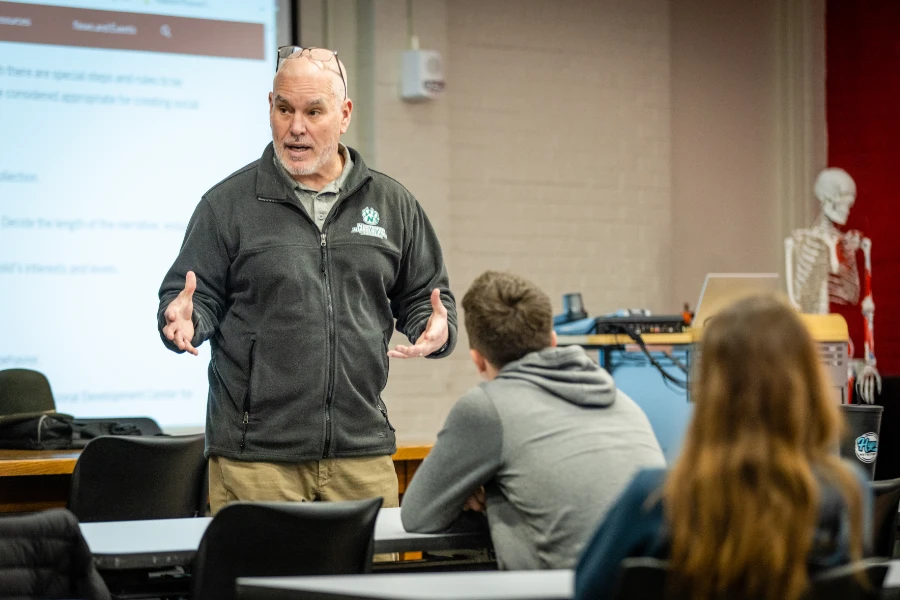
Learn public health from faculty who have done the work – in both community organizations and academia. Our faculty have helped lead the COVID-19 response in local agencies; built coalitions that improved community health; practiced as nurses, nurse practitioners, dietitians and school counselors; and conducted research that advanced the fields of medicine, psychology, sociology, health and physical education, nutrition, family studies and more. Their mentorship and guidance are critical in preparing you for your career and further study.
Related Majors |
Latest Blogs |