Program(s) Available: B.A.S., B.S., Minor
When disaster strikes, communities rely on leaders who can stay calm, think clearly and act fast. As the only in-person undergraduate program of its kind in Missouri, Northwest’s emergency management degree gives you professional training you won’t find anywhere else in the state. To develop your skills, you’ll join national, full-scale simulations, work directly with first responders and humanitarian teams, and learn how to navigate everything from severe storms to public-health crises and large-scale humanitarian events.
This bachelor’s degree in emergency and disaster management is a traditional four-year program in which you’ll learn how to plan for, manage and respond to emergencies through a combination of classroom learning and field experiences. It focuses on empowering you to do the greatest amount of good for the greatest number of people in your chosen career path. You’ll study the core facets of emergency management – preparedness, mitigation, response and recovery – and apply those concepts in national field simulations, internships and scenario-based projects.
Courses for the B.S. in emergency and disaster management include:
Skills you’ll gain as an emergency management major:
A flexible, individually tailored bachelor’s degree in emergency and disaster management designed specifically for transfer students. If you’re pursuing an Associate of Applied Science at another institution, you can apply credits from your program toward a four-year degree at Northwest. Benefits of the B.A.S. in emergency and disaster management include:
Providing the fundamentals of homeland security, defense, disaster psychology, humanitarian relief and public policy, this minor pairs well with several majors, including criminology, human services, political science, GIS, sociology and psychology. Courses include:
Designed for students interested in fire, EMS, law enforcement or tactical response roles, the emergency services minor blends real-world training with high-impact field experience. It also accepts credit from outside emergency services programs, making it especially transfer-friendly. Courses include:
This minor prepares you for careers with NGOs, nonprofits and global disaster relief organizations. You’ll study international conflict, humanitarian crises, cultural dynamics and how agencies coordinate during large-scale emergencies around the world. The international humanitarian operations minor pairs well with human services, political science, GIS, sociology, psychology and communication.

Travis Surprise
Instructor
660.562.1008
tsurprise@nwmissouri.edu
At Northwest, you’ll go beyond studying emergencies – you’ll train for them alongside FEMA teams, first responders and humanitarian organizations in full-scale simulations. That experience, along with a tight-knit community and faculty mentors, gives you the experience and connections you need for a variety of careers in emergency and disaster management.
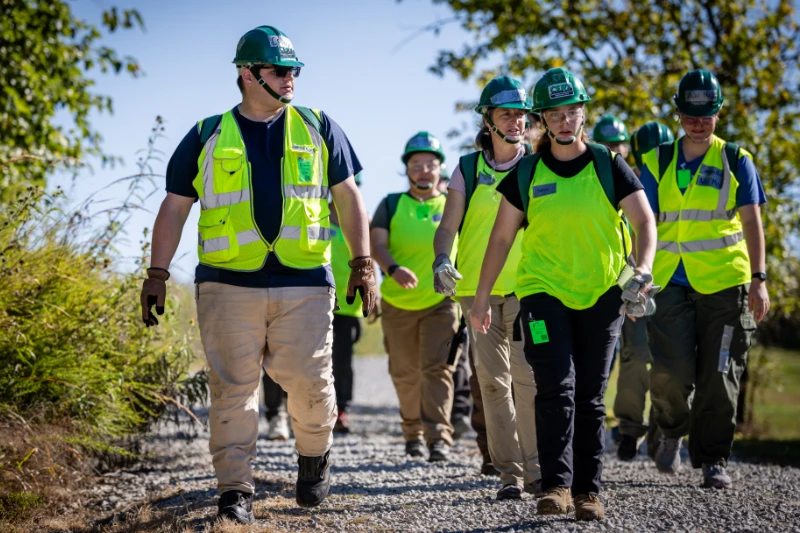
Study at the only institution in Missouri where you can earn an in-person bachelor’s degree in emergency and disaster management. That means more face-to-face support from faculty, more time learning in the field and more opportunities to practice working in high-pressure situations before you start your career. You’ll also be able to network with subject matter experts such as FEMA, Red Cross, a variety of different NGOs, over 14 county emergency managers and specialists, and other emergency management majors from schools nationwide.
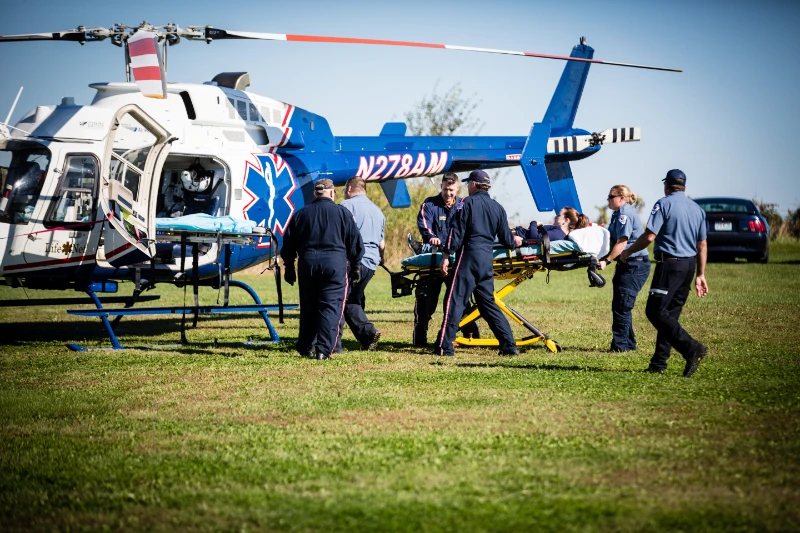
Step into the role of a real responder during multi-day national exercises like Missouri Hope, New York Hope and Atlantic Hope. These simulations place you in realistic environments where you’ll conduct search-and-rescue operations, support emergency medical care, coordinate with federal agencies and lead teams through stressful, unpredictable scenarios. It’s the kind of experience many students don’t get until their first job – but at Northwest, you’ll get career-ready experiences from the first day you step into the classroom.

Design emergency simulations, write an actual Emergency Operations Plan, train with FEMA and Red Cross protocols, and learn how agencies collaborate during disasters. Through these applied learning experiences, you’ll build confidence as a leader, sharpen your decision-making skills and develop the practical abilities employers expect. By the time you graduate, you’ll be prepared to step into various emergency and disaster management jobs and start contributing on day one.
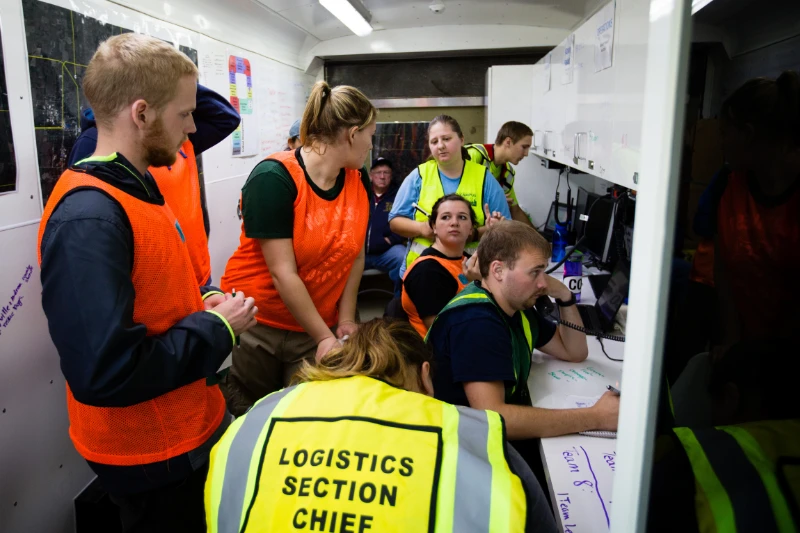
Demonstrate your skills and expand your career options with industry-recognized coursework and training. At Northwest, you’ll have the opportunity to participate in Community Emergency Response Team (CERT) training, Emergency Medical Responder or EMT courses, Red Cross Sheltering Training and FEMA ICS 100, 200 and 800 courses. This preparation shows employers you’re ready to respond, coordinate and lead in real emergency situations.
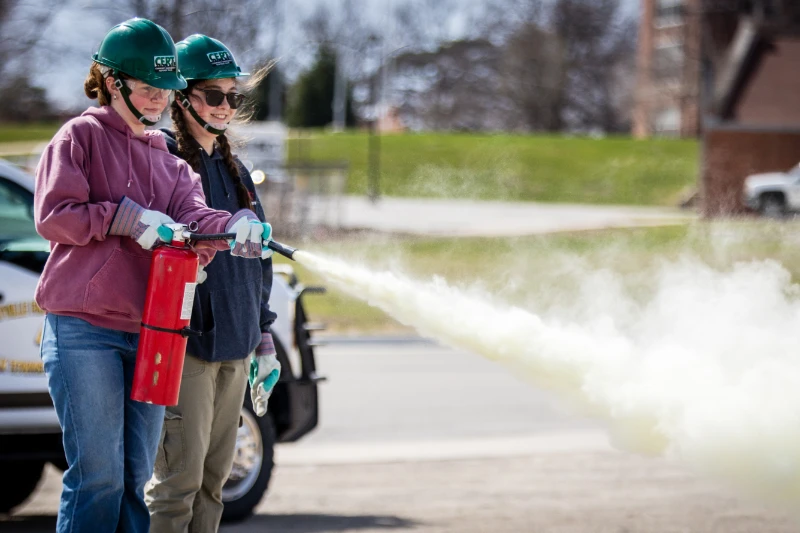
Work with faculty mentors who help you secure internships aligned with your future career, whether it’s public safety, military, humanitarian relief or another role. Northwest students have interned with many respected organizations, including the American Red Cross, Children’s Mercy Hospital, Sporting Kansas City, local emergency management offices, disaster relief nonprofits and federal partners, including FEMA and the Department of Health and Human Services.
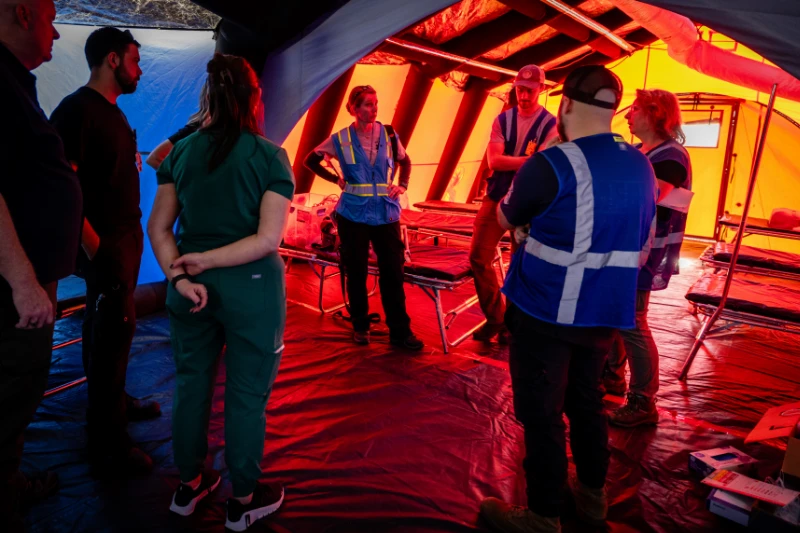
A degree in emergency management prepares you for roles in government, public safety, health care, business, nonprofit organizations, humanitarian agencies and other environments where people rely on trained professionals to reduce risk and respond to crises. Our graduates have gone on to work in federal and state emergency management offices, fire departments, the American Red Cross, the United Way, Team Rubicon, police departments, the military, occupational health offices and many other settings.
Specific emergency and disaster management jobs include:

We understand that college is an investment, which is why we’re invested in you. Our program has several scholarships available for emergency management majors. Search emergency and disaster management scholarships or browse all aid below.

With over 200 programs, you can find what sparks your curiosity and combine majors and minors for a marketing education that’s as unique as you.
Whether you want to get more experience for your career through the Emergency and Disaster Management Club, rally around a cause, or compete in club sports, there’s an option for you at Northwest. Browse student organizations.
With the most national titles in DII football history, 12 different sports teams and a community that cheers them on, you’ll feel Bearcat pride wherever you go – and experience a campus that truly feels like home.
“I participated in Missouri Hope to gain knowledge in more of a real-world application. Learning in a hands-on manner has always been more valuable to me, and an exercise like this really helps cater to that.”
Connor Russell | B.S. in Emergency and Disaster Management | 2024

Learn from faculty dedicated to supporting every student, every day. Northwest’s instructors bring expertise in emergency operations, disaster response, policy, humanitarian relief and leadership – and they’re committed to teaching through real-world practice and one-on-one mentorship.

Travis Surprise is an instructor in Northwest’s emergency and disaster management program who brings real-world leadership experience and strategic insight to the classroom. He holds an M.A. in strategic studies and a B.A. in strategic studies and defense analysis from Norwich University and teaches courses such as Disaster Response and Recovery, Professional Development in Emergency & Disaster Management and Homeland Security and Defense. With a background that includes serving as a Civil Affairs Senior Army Instructor at the U.S. Army’s Special Warfare Center and as a JROTC Army Instructor, Travis integrates practical emergency management principles with academic learning to help students build the skills and confidence needed for careers in emergency response, disaster planning and crisis leadership
Emergency management is the field dedicated to preparing for, responding to and recovering from crises such as natural disasters, public health emergencies and large-scale community disruptions. It requires planning, communication, leadership and coordination between individuals, agencies and organizations. At Northwest, you’ll develop these skills through in-person instruction and immersive simulations that mirror the real situations and stakes that emergency managers face.
You can start a career in disaster response by earning a bachelor’s degree in emergency and disaster management, gaining field experience, earning industry certifications and completing an internship with a disaster-focused organization. Northwest prepares you for disaster response careers through national full-scale simulations, FEMA-based training and connecting you to tailored internships. Our students have interned at such organizations as the American Red Cross, Children’s Mercy Hospital, Sporting Kansas City, local and state emergency management offices, and federal agencies like FEMA and the Department of Health and Human Services. These experiences help you build the skills and connections needed to enter the field.
Northwest’s emergency and disaster management program has a 93% job placement rate thanks to its strong emphasis on profession-based learning and strong relationships with local, state and federal agencies.
Common roles include emergency management specialist, disaster response technician, humanitarian aid worker, emergency operations center (EOC) coordinator, business continuity planner, public information officer and hazard mitigation specialist. You can also work as a:
With Northwest’s 93% job placement rate and strong connections to FEMA, the Red Cross and local emergency management agencies, you’ll be well-positioned to pursue these roles after graduation.
Related Majors |
Latest Blogs |